Deck Cost Calculator for Amarillo, TX
Pine or composite, framed at 40 psf, with height above grade as an input because that is what drives posts, bracing, guards and stairs.
No obligation. Every estimate starts at the house, looking at the slab, the wall you would attach to and where the afternoon sun actually lands.
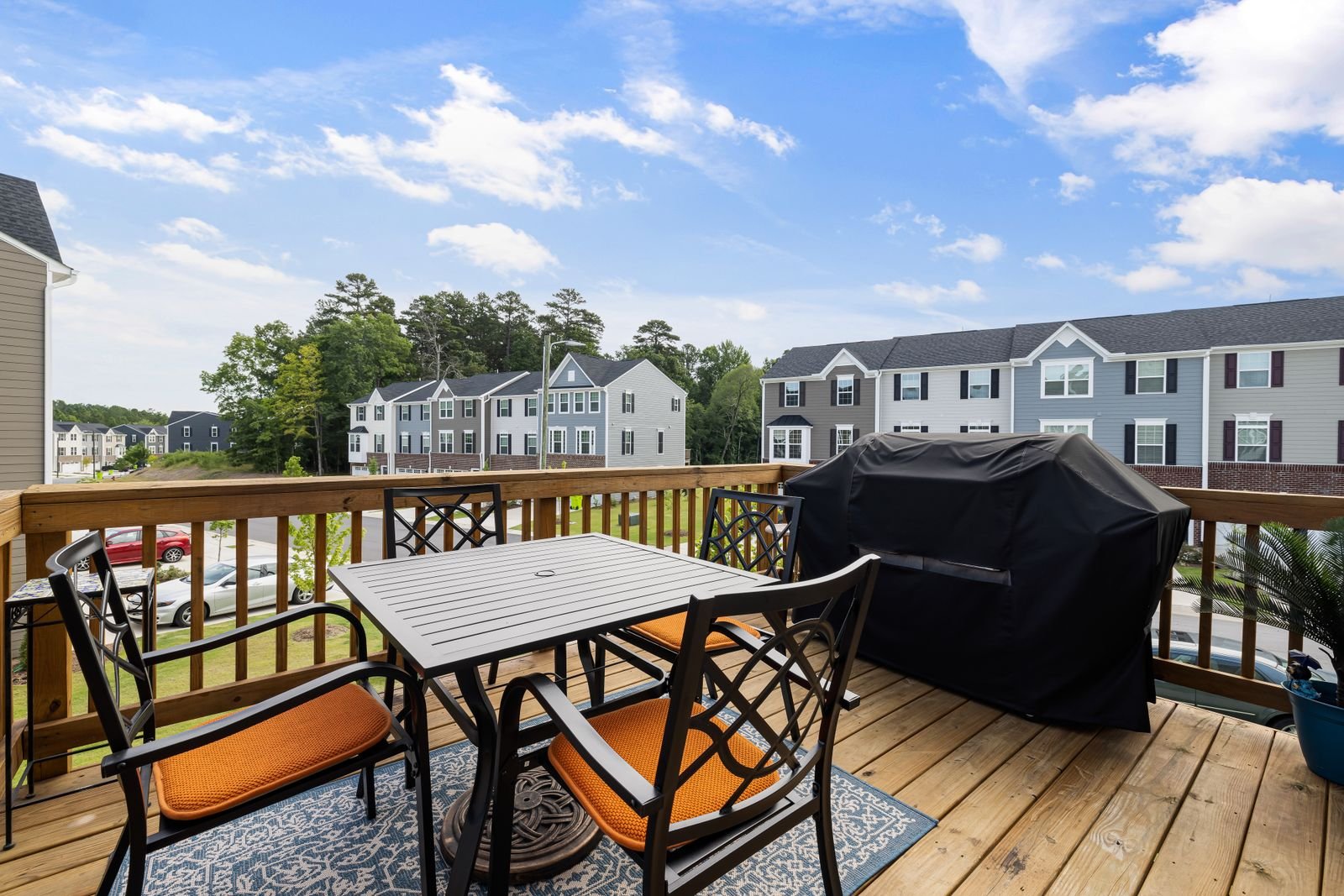 Deck · illustrative
Calculator
Price a framed deck
Set the size, the material and the height above grade. Height is the input that moves the number most, because it decides post length, bracing and whether guards and stairs are required.
These are planning estimates, not quotes. Every figure comes from published installed cost bands adjusted for this market. A calculator cannot see your ground, your wall, your access or your drawings. Treat the range as a way to decide whether a project is worth pursuing, not as a price.
Why these numbers
The ledger question sits behind every deck price here
A deck carries 40 psf of live load, four times what a patio cover carries. On an attached deck a great deal of that goes through the ledger bolted to the house, and in most of Amarillo that house is brick veneer.
The code closes the door in one sentence: "Deck ledgers shall not be supported on stone or masonry veneer." There is no interpretation available. So a deck here is either freestanding, with a beam and post line at the house, or the veneer is removed locally and the ledger is attached properly to the rim board with the flashing detailed to keep water out of the wall.
Both work and both cost money the national bands do not contemplate. The freestanding version adds a post line and its footings; the through-veneer version adds masonry work and a flashing detail that has to be right. Which is cheaper depends on the house, so we price both when both are viable.
Published installed bands are $25 to $50 / sq ft for pressure treated pine and $40 to $80 / sq ft for composite, adjusted once for this market.
Installed bands from published national cost guides. The calculators multiply them once by the the Craftsman 2026 National Building Cost Manual area factor, which puts this market 10 percent below the national average, then add the permit, engineering and any new concrete as separate lines.
Cost factors
What moves the number most
Height above grade
Post length, bracing, and whether guards and stairs are required. This is the single largest driver and it is decided by your door threshold, not by preference.
Attached or freestanding
On brick veneer, either a freestanding beam and post line at the house or veneer removed locally with a properly flashed ledger. Neither is free.
Material
Pine takes a stain and needs recoating in 74 percent annual sunshine. Composite needs no staining, runs hotter underfoot in direct sun, and moves more, so end gapping is a specification.
Guards and stairs
A guard is a structural element with its own load case, not trim. Stairs add framing, footings and their own guard.
Footings
To the 24 in. Amarillo minimum, anchored rather than set on a pad, and designed for uplift as well as bearing.
Whether a cover is coming
A cover over a deck needs its own footings passing through the frame. Designing both together is far cheaper than sequencing them years apart.
Next step
Or find out you want a patio instead
If your door is at grade and the yard is flat, a concrete patio does the same job for a fraction of the cost. We will say so, even though the deck is the larger job.
Questions
About these costs
Why does height above grade matter so much?
It drives four things at once: post length, bracing, whether a guard is required and whether stairs are needed. A deck twelve inches off the ground and one four feet off the ground are different structures at the same square footage.
Around Amarillo plenty of lots are flat and plenty are not, and it is the door threshold rather than the yard that usually decides.
Can the ledger go on brick?
No. the 2021 International Residential Code states it directly: "Deck ledgers shall not be supported on stone or masonry veneer."
The two accepted routes are a freestanding deck with a beam and post line at the house, or removing the veneer locally and attaching a ledger to the rim board with proper flashing. We price both where the house allows both.
Deck or concrete patio?
If the door is at grade and the ground is flat, a concrete patio at $4 to $12 / sq ft does the same job far more cheaply and needs no maintenance.
A deck earns its cost where there is a level change, where the ground slopes, or where seasonal soil movement makes a slab a liability. On the high shrink and swell clays, a framed deck on properly founded piers is indifferent to surface movement in a way a slab is not.
Does composite get too hot here?
It runs hotter underfoot than timber in direct sun, and Amarillo has 146 a year clear days a year with a July normal high of 93 F. Lighter colours help and shade helps more.
If the deck will be under a cover, the difference largely disappears and composite's low maintenance becomes the deciding factor.
Get it real
A range is a start. A walkthrough is the answer.
Send the address, what your exterior wall is made of and a photo of the patio. That is where a range becomes a scope.