Patio Covers in Pampa, TX
The only town in this service area that publishes its own design wind speed. It is 115 mph, and it is higher than the ASCE value used in Amarillo.
No obligation. Every estimate starts at the house, looking at the slab, the wall you would attach to and where the afternoon sun actually lands.
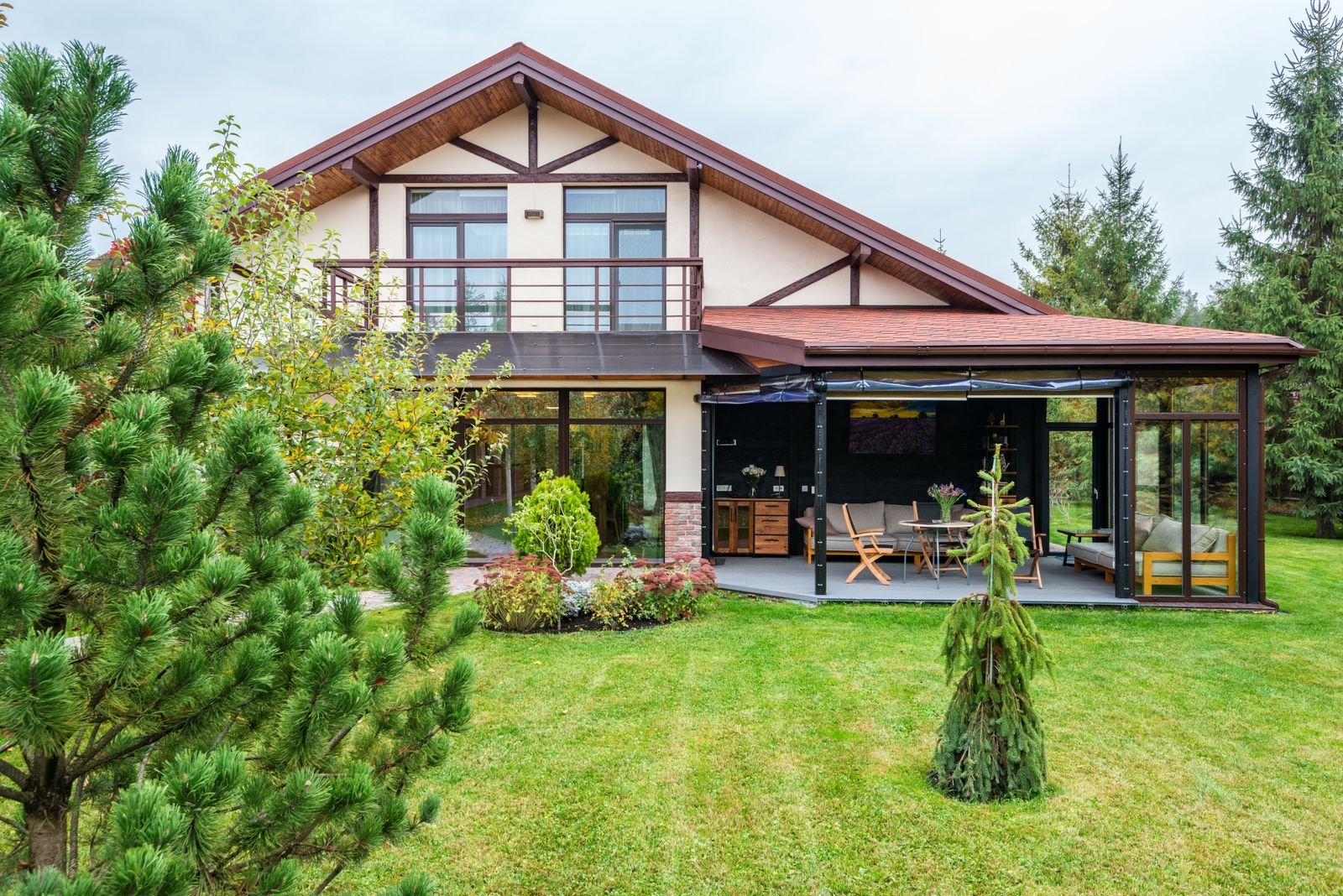 Covered outdoor room · illustrative
Pampa
Pampa at a glance
Every figure below comes from a named public source. Where we could not verify something, this page says so instead of filling the gap.
Population from ACS 2024 five-year estimate. Design wind and snow from ASCE 7-16 wind and snow hazard data; permit and code details from each jurisdiction's own published material.
Permits
Pampa publishes a permit manual, and it is the best document of its kind here
We confirm the current position for your specific address before quoting. Fee schedules and code adoptions change, and a page that was right last year is not a substitute for asking.
Pampa publishes a public Construction Permit Manual, version 2.2 dated September 2024, and it states the things every other town leaves you to guess at.
Adopted codes: the 2018 IRC, 2018 IBC, 2020 NEC, 2018 IFC, 2018 IPC, 2018 IMC, 2018 IFGC and the 2017 Panhandle Residential Foundation Manual. Permit exemption threshold: a one-storey detached accessory structure not exceeding 120 square feet, with setbacks still applying. Anything larger, and anything attached, needs a permit. There is a named building official.
And the number that matters most to us: a published design wind speed of 115 mph. Pampa is the only town we work in that puts that figure in writing. It is higher than the 108 mph ASCE ultimate value at Amarillo, so a design that satisfies Amarillo does not automatically satisfy Pampa. We design to the published local figure here rather than to the regional one.
The ground
Pullman hardland, and you can say so plainly
The Gray County soil survey maps five associations, and Pampa sits in the Pullman association, the nearly level to gently undulating High Plains hardland occupying the western and northern part of the county.
Pullman is classified fine, mixed, superactive, thermic Torrertic Paleustolls. It runs 35 to 50 percent silicate clay in the control section, its linear extensibility is 6 to 9 cm in the top metre, permeability is slow, and it cracks through the upper horizons when dry.
Pampa also adopts the 2017 Panhandle Residential Foundation Manual by name, which defines expansive clay as a weighted plasticity index above 15 and gives separate tables for the 15 to 20 and 21 to 25 bands. Worth knowing: that manual covers houses and detached accessory buildings under 600 square feet. It does not cover attached structures such as patio covers and porches, so it informs the footing design without governing it.
On the record
The 1995 tornado, and why open ground matters
On 8 June 1995 a violent F4 tornado struck the industrial district on Pampa's west side, along a path of about three miles and roughly 200 yards wide, damaging or destroying about 250 structures with damage estimated at $30 million. We cite that from the general public record rather than from a National Weather Service event page, because we could not retrieve one.
More routinely, Pampa recorded an inch of rain in the 18 May 2023 severe weather event. And the published 115 mph design wind speed exists because this is open country where nothing slows the wind down before it reaches a house.
The market
The largest housing stock and the tightest budgets
Pampa is the largest town in this service area at 16,659 people, and it has the largest housing stock at 8,451 units. About 19 percent of those are unoccupied, which is the classic post-boom oversupply signal, and poverty runs at 17.2 percent.
Median home value is $100,700, the second lowest here. Median household income is $56,626, but per-capita income is $35,014, higher than Canyon's, reflecting oil and gas wages.
The realistic read is a cost-sensitive market with a large absolute number of houses in it. What we do differently in Pampa is put the money into the structure and the footings and let the finish be simple, because the published wind speed here is higher and a cheap structure fails at the connections first.
What we build here
Outdoor structures in Pampa
Patio Covers
A roof over the slab you already have. Aluminium, insulated panel or louvered, engineered for 108 mph wind and anchored for uplift.
What it involves →Covered Patios
Slab and cover together, where there is no usable patio yet. One pour, one structure, one set of footings designed as a whole.
What it involves →Outdoor Kitchens
Counter run, grill, gas, water and power under cover. The services get planned before the concrete, because afterwards is expensive.
What it involves →Questions
About building in Pampa
What design wind speed applies in Pampa?
115 mph. Pampa is the only town in this service area that publishes a design wind speed, and it appears in the city's own Construction Permit Manual, version 2.2 dated September 2024.
That is higher than the 108 mph ASCE ultimate design wind speed at Amarillo, so a cover designed for an Amarillo address is not automatically adequate here. We design to Pampa's published figure for Pampa jobs.
When does a patio cover need a permit in Pampa?
Almost always. The published exemption is a one-storey detached accessory structure not exceeding 120 square feet, and setbacks still apply even to those. Anything larger, and anything attached to the house, needs a permit.
Pampa has adopted the 2018 IRC, 2018 IBC and 2020 NEC, along with the 2017 Panhandle Residential Foundation Manual, and it names a building official. This is a real review, not a counter transaction.
Is the clay under Pampa expansive?
Yes, and the survey is specific. Pampa sits in the Pullman association: 35 to 50 percent clay in the control section, linear extensibility 6 to 9 cm in the top metre, slow permeability, and it cracks through the upper horizons when dry.
The 2017 Panhandle Residential Foundation Manual, which Pampa has adopted, treats any soil with a weighted plasticity index above 15 as expansive. Pullman is comfortably over that line.
Cost
Price a cover for a Pampa address
The calculators take your dimensions, your roof type, your wall and your jurisdiction, and return a band with the permit worked out rather than guessed at.
Next step
Send the address and a photo of the wall
What your exterior wall is made of, and which permit desk your address falls under, decide more about the project than the dimensions do.