Outdoor Fireplaces and Fire Pits in Amarillo, TX
Built-in fireplaces and fire features, gas or wood, sited for the prevailing wind rather than for the view. In this climate that is the decision that makes or breaks the thing.
No obligation. Every estimate starts at the house, looking at the slab, the wall you would attach to and where the afternoon sun actually lands.
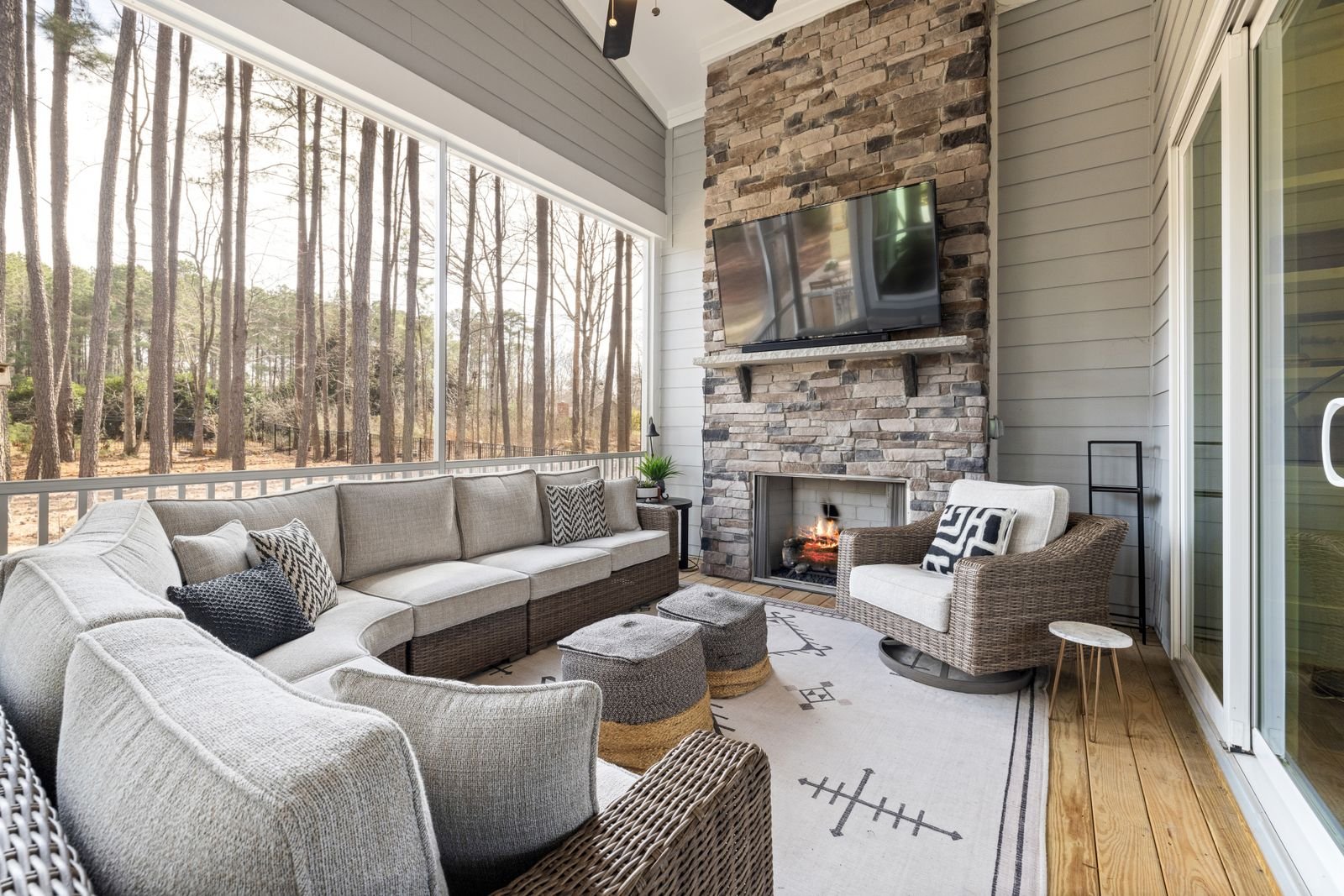 Outdoor fireplace · illustrative
The build
Wind decides where it goes, everything else is finish
Mean wind speed at Amarillo is 12.9 mph, and the airport has recorded a gust of 83 mph, 14 March 2025. A fire feature is the one structure where that number changes the plan.
A fire feature is the thing that makes a patio usable in March and October, which in the Panhandle is a lot of evenings. It is also the one element that people site for the view and then never use, because the wind takes the smoke or the heat straight past them.
Amarillo's mean wind speed is 12.9 mph. That is not an occasional breeze, it is a background condition. An open fire pit in the middle of an unprotected yard on the plains loses its heat downwind within a few feet, and the seat on the upwind side is the only comfortable one. A built-in fireplace with a firebox and a chimney is far less affected, because the fire is enclosed on three sides and the draw is vertical.
So the honest design conversation starts with which of the two you actually want. A fire pit is social, cheap and low. A fireplace is directional, more expensive, taller, and works far better in wind. Which one suits you depends on how exposed your yard is and how you sit around it.
The second decision is fuel. Gas lights instantly, produces almost no smoke and needs a line run and sized. Wood is cheaper to build for, produces real smoke and needs storage and somewhere for ash. Neither is better; they suit different households.
Included
What is in a fire feature build
Siting against the wind
Prevailing direction, the shelter your house and fence actually provide, and where the smoke goes on a normal evening rather than a calm one.
Clearances to combustibles
Distance to the house, to a cover above it, to fencing and to any overhanging structure, taken from the appliance or the code rather than from habit.
Footing and structure
A masonry fireplace is a heavy structure that needs a foundation of its own. It does not sit on a patio slab.
Gas run and shut-off
Line sized for the burner, sleeved under any concrete, and with an accessible shut-off. Permitted where the jurisdiction requires it.
Firebox and flue
A firebox that is the right proportion for its opening, and a flue with enough height to draw in a windy place.
Finish that survives heat and sun
Stone, brick or clad masonry chosen for thermal cycling, and mortar specified for the same.
Placement
Under a cover, or out in the open
Putting a fire feature under a patio cover is a common request and it is the one that needs the most care. Clearance above a fire to a combustible or even a non-combustible roof is not a matter of taste, it is a manufacturer requirement for a gas appliance and a code question for solid fuel.
A gas fire feature with a listed appliance can often sit under cover if the manufacturer's clearances are met and there is a ventilation path. Solid fuel under a roof is a different proposition and generally wants a proper chimney taken through or clear of the structure.
Out in the open the constraint flips. Now you have no clearance problem and a wind problem. A low fire pit in an exposed yard is pleasant on the ten calm evenings a year and frustrating on the rest. Shelter helps: a wall, a fence line, a planted screen, or siting it in the lee of the house.
There is also a hard local reality worth stating. This region sees genuine fire weather. Burn bans are issued by county judges and they are not advisory. A gas feature can usually be used under a burn ban when an open wood fire cannot, and for some households that alone decides the fuel.
Climate figures from National Weather Service Amarillo climatology and NOAA NCEI local climatological data.
Process
How a outdoor fireplaces and fire pits project runs
Stand in the yard on a windy day
Genuinely. Where the wind comes from, and where you would want to sit, are the two inputs that matter most.
Choose fireplace or fire pit
Enclosed and directional, or open and social. Exposure usually answers this.
Choose the fuel
Gas for instant use and no smoke, wood for cost and for the fire itself. Burn bans matter to this decision.
Check clearances
To the house, to any cover, to fences and to anything overhanging. Before the footing is dug.
Footing and structure
A masonry fireplace gets its own foundation, separate from the patio slab.
Build, connect and test
Masonry, flue, then gas connection and test where applicable.
Before you commit
Three things that are cheaper to decide now
Gas before concrete. If there is any chance of a gas fire feature, the line goes in before the patio is poured. Afterwards it means cutting a slab, and the repair is visible forever.
Where the smoke goes. Wood smoke drifts to a neighbour's property as readily as to yours, and the prevailing wind here is consistent enough that it will do so predictably. Siting a wood fire on the downwind boundary of a small lot is a decision with a social cost.
Whether it will actually be used. The honest question is how many evenings a year you will sit outside. In Amarillo the answer is genuinely high, because the climate has long shoulder seasons and 146 a year clear days, but it is worth asking before spending on a full masonry fireplace when a well-sited gas fire pit would have been used more.
Permits: inside Amarillo, gas work is permitted and inspected. Outside city limits there is no county building permit, but electrical work outside city limits still has to meet the state electrical code. And if you are in an association, a chimney is a visible structure and will be reviewed as one.
Cost
Talk through fireplace or fire pit
Tell us how exposed the yard is and how you sit outside. That answers the fuel and the form faster than a catalogue does.
Questions
About outdoor fireplaces and fire pits
Can I put a fire pit under my patio cover?
A listed gas fire feature often can, if the manufacturer's clearance to the roof above is met and there is a ventilation path. An open wood fire under a solid roof generally cannot without a proper chimney arrangement.
We check the clearance against the specific appliance and the specific roof height, because the answer changes with both.
Gas or wood?
Gas lights instantly, makes no smoke, needs no storage and can normally be used when a burn ban is in force. It needs a line sized and run, which is cheap before a pour and expensive after.
Wood is cheaper to build for and gives you a real fire. It also means smoke, ash and somewhere to keep the wood, and the prevailing wind here will decide who else gets the smoke.
Does a fire feature need its own foundation?
A masonry fireplace does. It is a tall, heavy structure and it is not something a four inch patio slab should be asked to carry. A footing sized for the mass goes in first, and the patio is finished around it.
A lightweight gas fire bowl or a manufactured unit is a different case and often sits on the slab quite properly.
How much wind is too much for a fire pit?
There is no single number, but the local baseline is useful context: the mean wind speed at Amarillo is 12.9 mph, which is enough to carry heat away from an open low fire on most evenings.
That is the argument for either a taller enclosed fireplace, or a fire pit sited in genuine shelter, rather than an open pit in the middle of an exposed yard.
Do burn bans affect this?
They do, and they are real restrictions issued at county level rather than suggestions. During a ban, open outdoor burning is restricted, and the details vary with each order.
Listed gas appliances are usually treated differently from open wood fires, which is one practical reason people choose gas here. Check the current order with the county before lighting anything.
Can a fireplace be built into an outdoor kitchen?
Yes, and it is a good use of one gas run and one footing programme. The two share a trench, share a design and share a permit conversation.
The constraint is layout: a fireplace radiates heat toward wherever it faces, and standing at a grill in front of it in July is not comfortable. They usually want to be adjacent rather than opposite.
Related
Other structures people weigh this against
Outdoor Kitchens
Counter run, grill, gas, water and power under cover. The services get planned before the concrete, because afterwards is expensive.
What it involves →Covered Patios
Slab and cover together, where there is no usable patio yet. One pour, one structure, one set of footings designed as a whole.
What it involves →Pergolas & Pavilions
Open rafters or a freestanding solid roof out in the yard. Different footings from an attached cover, and no ledger problem at all.
What it involves →Next step
Send the address, not just the size
What your wall is made of, what your slab is doing and which permit desk your address falls under decide more about this project than the dimensions do.